
What Is Momme in Silk Fabric?
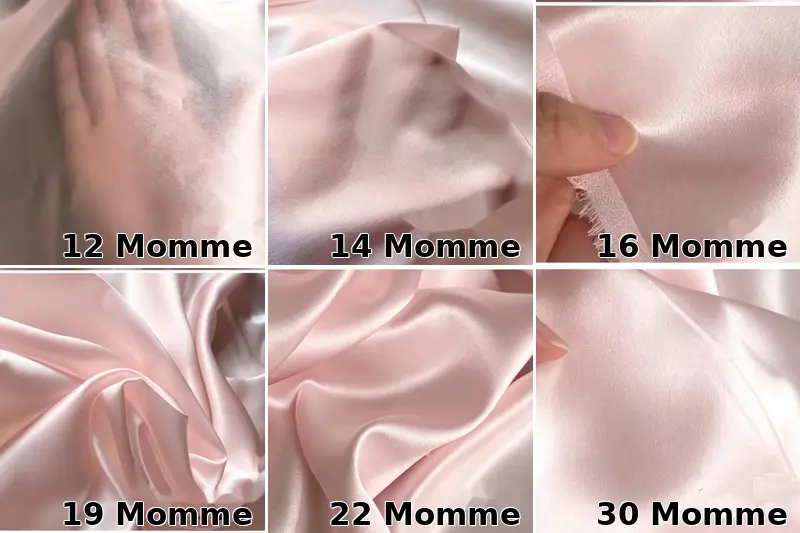
If you are comparing silk products, you will often see numbers such as 16 momme, 19 momme, 22 momme, or 25 momme. These numbers do not describe the silk grade. They describe the weight of the silk fabric.
Momme affects thickness, drape, coverage, daily-use durability, and cost. A higher momme can be useful, but it is not automatically the best choice for every silk product.
For buyers, the better question is: which momme fits this product?
- Momme is silk fabric weight, not silk grade or thread count.
- Higher momme usually means a heavier, denser fabric, but not always a better product.
- The right momme depends on product use, drape, care expectations, price range, and sample review.
1. What Does Momme Mean?
Momme, often written as mm, is a traditional weight unit used for silk fabric. In simple terms, it tells you how heavy and dense the silk fabric is.
One momme equals about 4.34 grams per square meter. If two silk fabrics use the same weave and similar fiber quality, a 22 momme fabric will usually feel heavier and denser than a 19 momme fabric.
Momme is not the same as thread count. It is also not the same as silk grade. A fabric can be 22 momme and still have poor weaving, uneven dyeing, or weak finishing. That is why momme should be checked together with weave, hand feel, color, sewing, and care requirements.
2. Why Momme Matters
During sample review, we do not stop at "soft." We check how the fabric moves, whether it feels too thin for the product, whether the surface looks even, and whether the fabric keeps a clean shape after cutting and sewing.
Momme can affect:
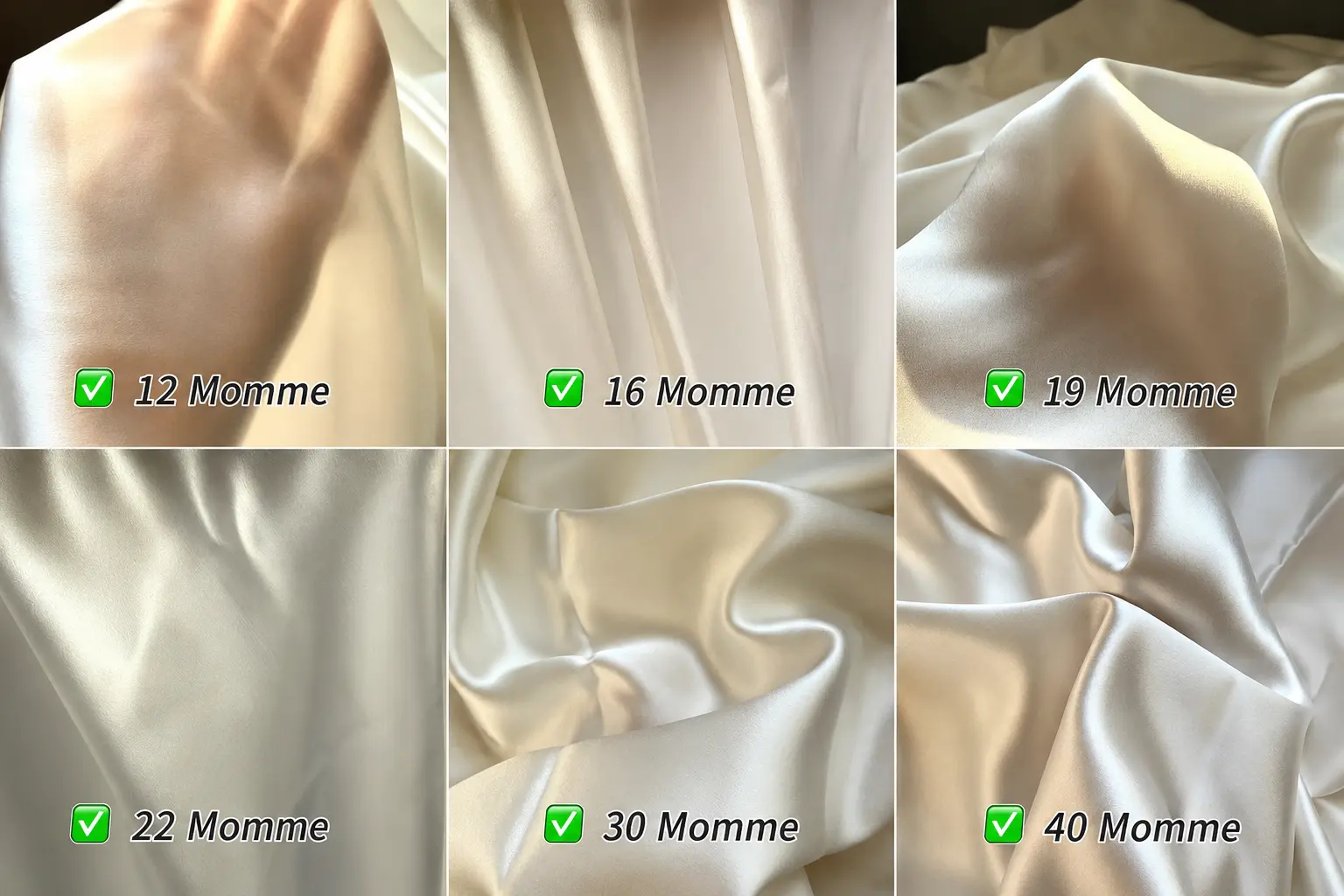
- Thickness: higher momme usually feels more substantial.
- Drape: lower momme may feel lighter and more fluid.
- Coverage: higher momme usually reduces sheerness.
- Durability: higher momme may hold up better for daily-use items.
- Cost: higher momme uses more silk fiber, so the cost is usually higher.
- Sewing behavior: very light silk may shift more during cutting and stitching.
This is why a silk scarf, a pillowcase, and sleepwear should not always use the same fabric weight. It is also why momme can affect the discussion in a custom silk products MOQ guide: fabric choice may change cost, planning, and production options.
3. Is Higher Momme Always Better?
No. Higher momme is not always better.
For a pillowcase, 22 momme may feel more stable than 16 momme because the fabric is used every night and needs to handle washing. For a large scarf, very heavy silk may feel less fluid around the neck. For summer sleepwear, a heavier momme may feel too warm or too structured for some customers.
The right momme depends on the product, price range, season, target customer, and how the item will be used.
4. Common Momme Ranges and Uses
This table gives a practical starting point. Final selection should still be confirmed by sample because weave and finishing can change the feel.
| Momme range | General feel | Common uses | What buyers should check |
|---|---|---|---|
| 12-14 momme | Light, thin, more fluid | Lightweight scarves, promotional scarves, linings, some accessories | Check transparency, edge finishing, and print clarity. |
| 16 momme | Light to medium | Scarves, sleep masks, lighter sleepwear, budget-sensitive gift items | Check whether it feels too thin for the target market. |
| 19 momme | Medium, balanced | Pillowcases, sleepwear, eye masks, scarves, scrunchies | Often practical when cost and hand feel both matter. |
| 22 momme | More substantial | Pillowcases, sleepwear, bedding, eye masks, gift sets | Good for daily-use products where durability matters. |
| 25 momme | Heavier, denser | Higher-weight pillowcases, robes, bedding, structured sleepwear | Check whether the product becomes too heavy or warm. |
| 30 momme and above | Very heavy | Selected bedding, dense pillowcases, special custom projects | Review cost and hand feel carefully before bulk production. |
5. How to Choose Momme by Product Type
Different silk products need different fabric behavior. A good choice is not only about the number.
Silk Pillowcases
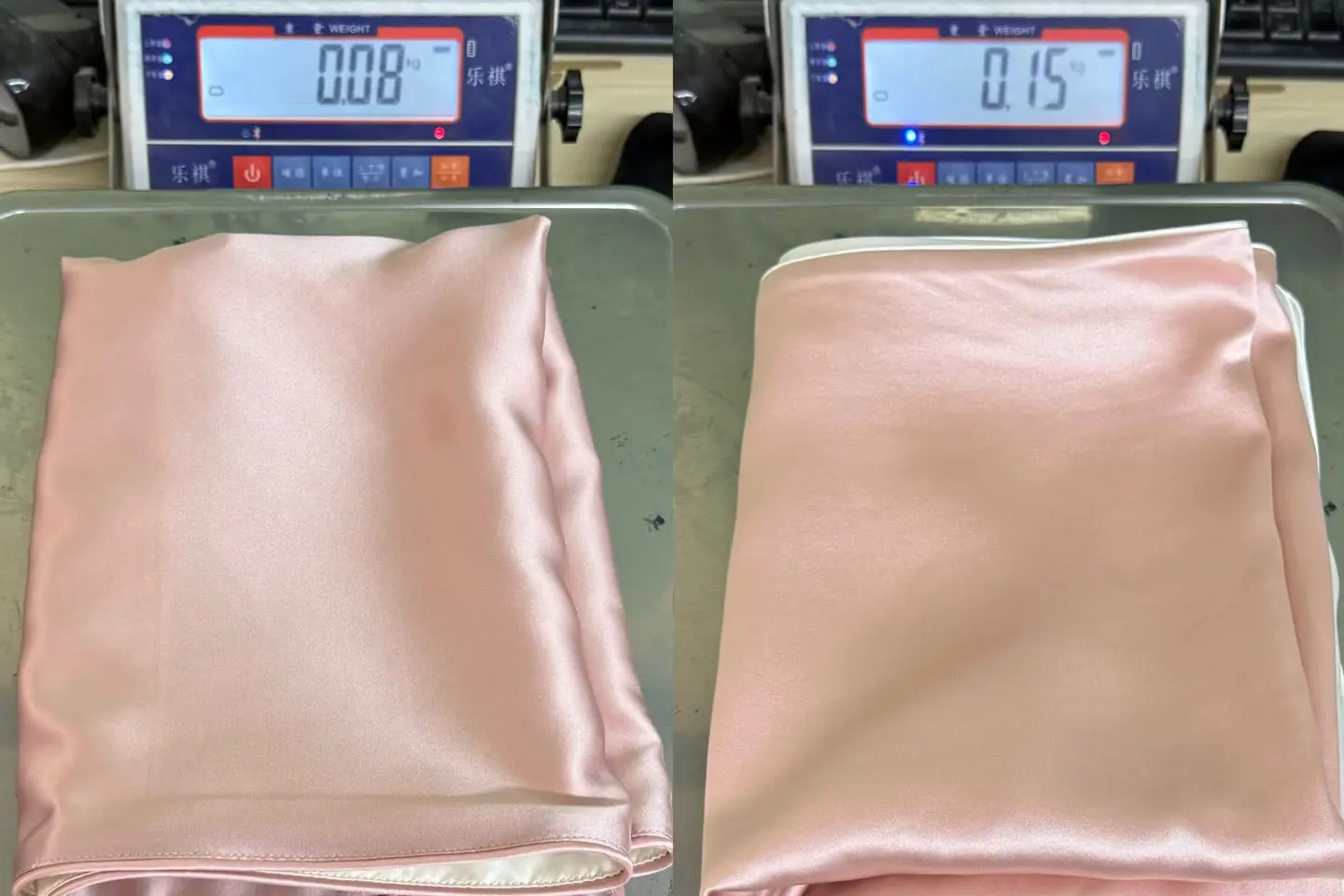
For pillowcases, 19 momme and 22 momme are common choices. A 19 momme pillowcase is lighter and usually more budget-friendly. A 22 momme pillowcase feels heavier in hand and is often preferred for daily use because it has more body.
Some brands choose 25 momme for a thicker feel, but it also increases cost. It may not be necessary for every retail or gift program. For a closer buying comparison, read our 19 momme vs 22 momme silk comparison.
If the project is focused on bedding or pillow products, the custom silk pillowcase collection can help you connect the momme decision with size, closure style, and product positioning.
For pillowcases, buyers should check:
- Whether the fabric feels too thin when held against light.
- Whether the surface stays smooth after washing.
- Whether the closure style works with the fabric weight.
- Whether the final price still fits the brand position.
Silk Sleepwear
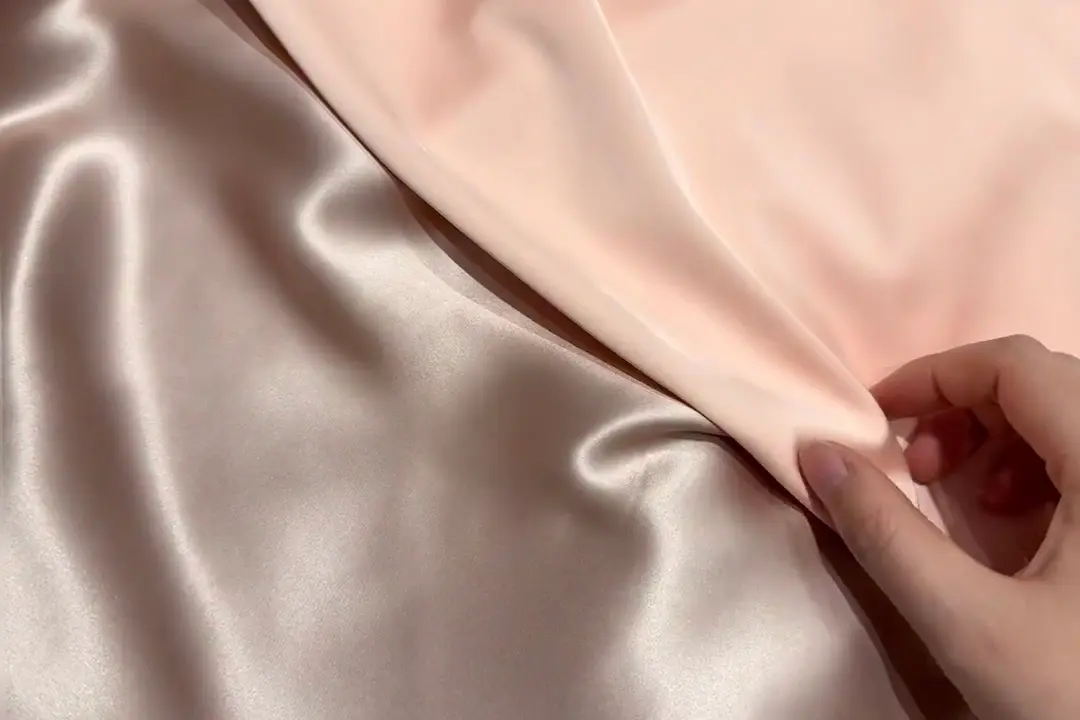
For sleepwear, 16, 19, 22, and 25 momme can all be used, depending on the style.
Light sleepwear may use 16 or 19 momme for a softer drape. Robes, long pajama sets, or cooler-season styles may use 22 momme or higher. Heavier fabric can also change the fit. It may make a loose style feel more structured.
For sleepwear, the sample should be checked on the body or on a form, not only on a flat table. Silk can look smooth when flat but pull differently at seams when worn.
Silk Scarves and Twillies
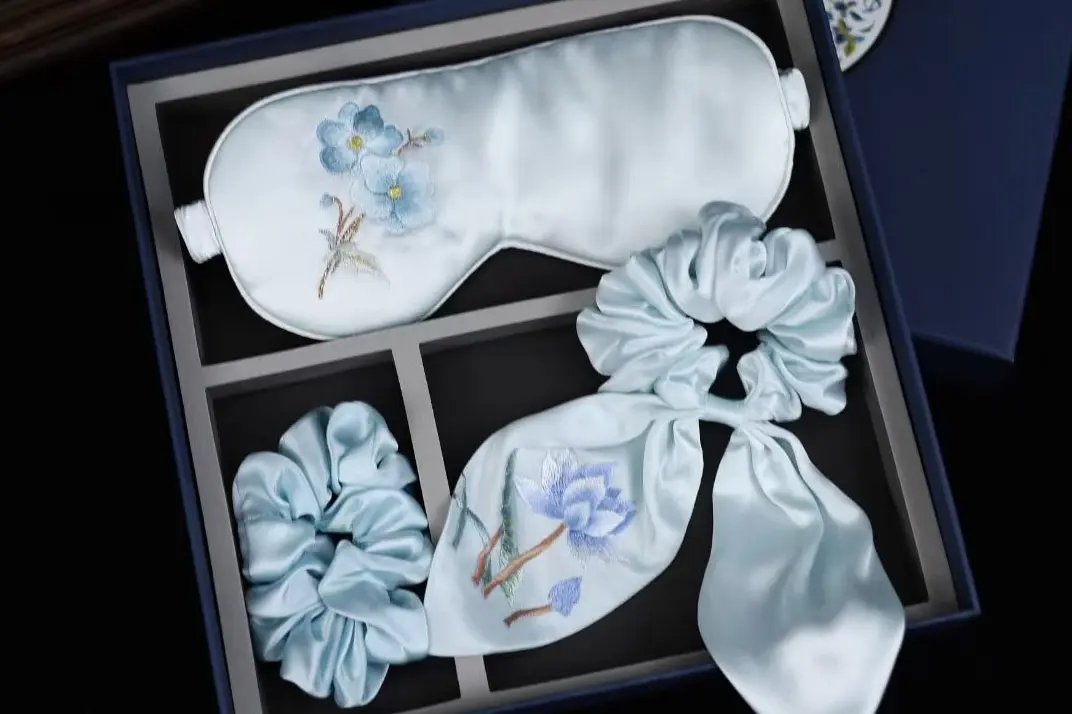
Scarves need good drape. For many scarf projects, lower to medium momme is easier to wear and tie. Very heavy silk can look strong in hand, but it may not fold as softly.
For scarves, momme should be checked together with:
- Fabric weave, such as satin or twill.
- Printing method and color coverage.
- Edge finishing, such as hand-rolled or machine hem.
- Final size and how the scarf will be worn.
Silk Eye Masks
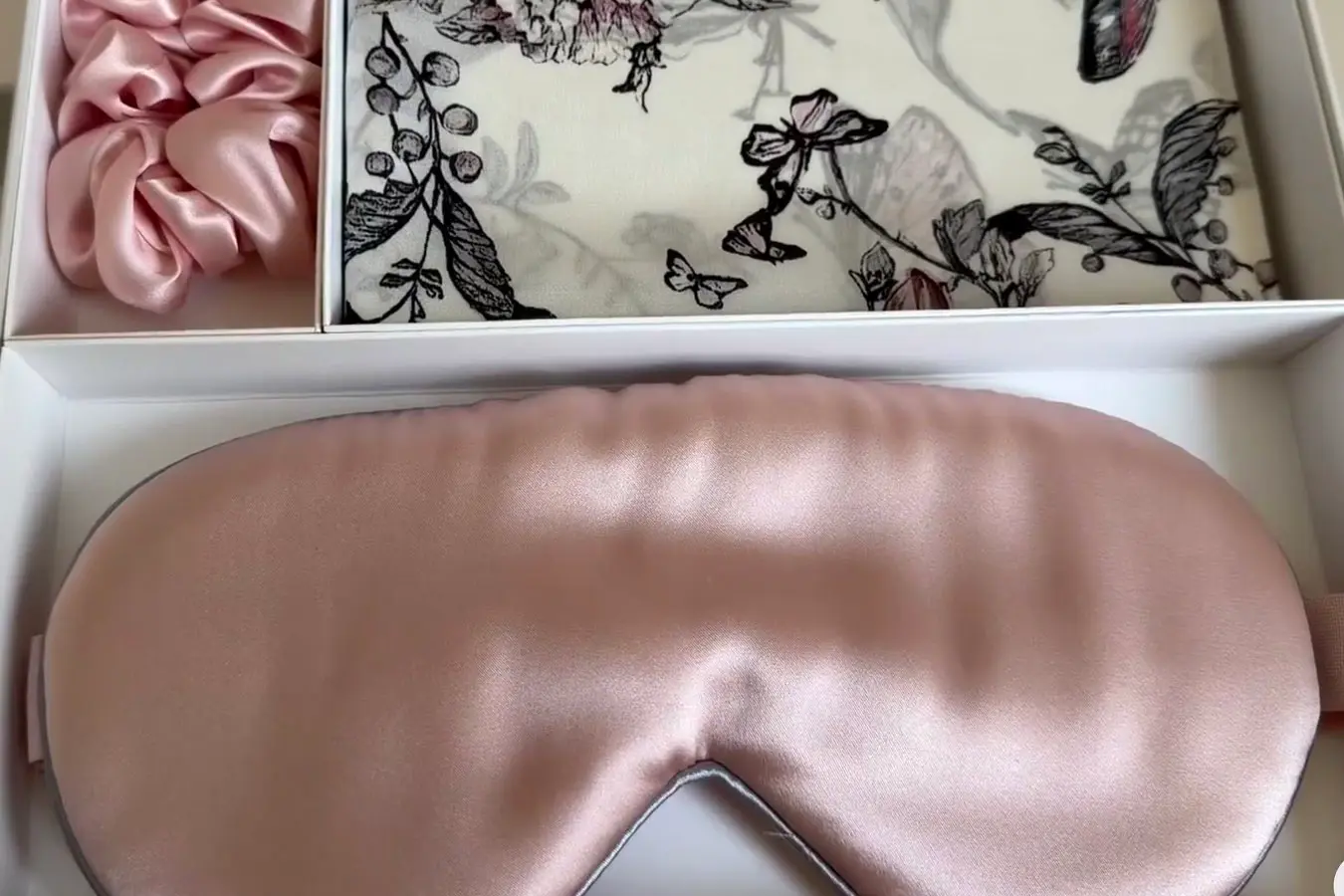
For eye masks, the outer silk fabric is only one part of comfort. Filling, shape, nose area, and strap tension also matter.
Many eye masks use medium-weight silk because the surface should feel smooth but not bulky. If the fabric is too thin, the product may feel less substantial. If the full construction is too thick, it may press against the face.
Silk Scrunchies
For scrunchies, fabric weight affects the look and the way the fabric gathers. A very light silk can look soft but may not give enough body. A heavier silk can look fuller but may increase cost and change the stretch feeling.
Elastic quality matters as much as momme. A well-chosen fabric cannot fix a weak elastic.
Silk Bedding
Bedding often needs more fabric stability than a scarf or accessory. 19 momme, 22 momme, and higher options may be used depending on the product and price point.
For bedding, buyers should check not only hand feel but also seam strength, washing instructions, size tolerance, and whether the fabric weight fits the expected retail price.
6. Common Mistakes When Choosing Momme
The first mistake is choosing the highest momme just because it sounds better. This can make the product more expensive and less suitable for the way it will be used.
The second mistake is comparing momme without checking weave. A 19 momme silk satin and a 19 momme silk twill will not feel the same.
The third mistake is approving a fabric number without seeing a sample. Two fabrics with the same momme can still differ in surface, color, finishing, and hand feel.
The fourth mistake is ignoring the final product structure. A zipper pillowcase, a hand-rolled scarf, and a padded eye mask all behave differently during sewing.
7. What to Ask Before Confirming Momme
Before choosing a momme for a custom silk project, ask these questions:
- What product are we making?
- Will the item be used daily or occasionally?
- Does the customer expect a light, fluid feel or a more substantial feel?
- Is transparency a concern?
- Will the fabric be printed, dyed, embroidered, or washed often?
- What is the target price range?
- Does the packaging need to fit a certain thickness or folding style?
These questions are more useful than asking for the highest momme available. For broader fabric selection and custom material planning, our custom silk fabric page can help you review material direction before sampling.
8. A Practical Way to Decide
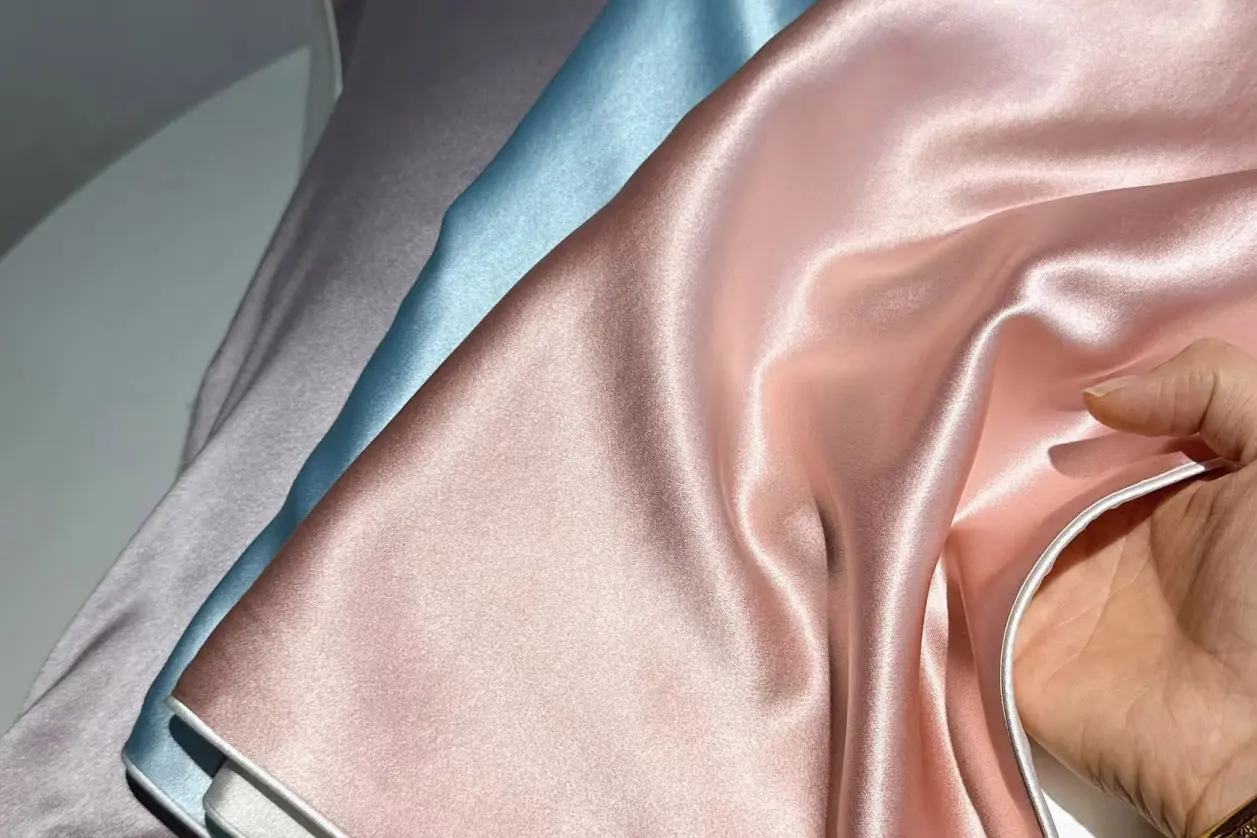
If you are unsure, start with the product use.
For pillowcases, compare 19 and 22 momme samples. For sleepwear, check how the fabric drapes on the body. For scarves, test how the fabric folds, ties, and holds the edge finish. For eye masks and scrunchies, review the full product sample, not just the flat fabric.
Before bulk production, it is useful to review a silk sample approval checklist so the fabric number, hand feel, construction, color, and packaging are all confirmed together.
Momme matters, but it cannot carry the whole product. Weave, cutting, sewing, finishing, care instructions, and QC all change the final result.
Closing
Momme helps buyers understand silk fabric weight, but it should not be used alone to judge quality. A higher momme usually means a heavier and denser fabric, but the best choice depends on the product.
For a practical custom silk project, the right question is not "What is the highest momme?" It is "Which momme works best for this product, this customer, and this price range?"
If you are comparing momme options for a custom order, prepare your product type, target size, and price range first. Those details make the fabric recommendation more accurate, and you can contact us when you are ready to review samples or production details.
Author note: Written by the WiseSilk factory team, based on common fabric selection questions we see during silk product sampling and bulk production planning.