

Hand-Rolled Silk Edges for Custom Silk Scarves
The edge of a silk scarf is more than a finishing detail. It affects how the scarf feels, drapes, folds, and presents as a finished product.
- ✓ Review hand-rolled and refined edge options
- ✓ Match finish to fabric, size, and artwork
- ✓ Plan border quality before production
What Is a Hand-Rolled Silk Edge?
A hand-rolled edge creates a soft raised border. It looks more crafted than a flat stitched edge, but needs more time and inspection.
Review Scarf DetailsFabric
Twill, satin, crepe, and habotai roll and drape differently.
Scarf Size
Square scarves, long scarves, and shawls show edges differently.
Artwork Border
Keep logos, text, and key artwork away from the cut edge.
Timeline
Hand rolling adds labor, inspection time, and planning needs.
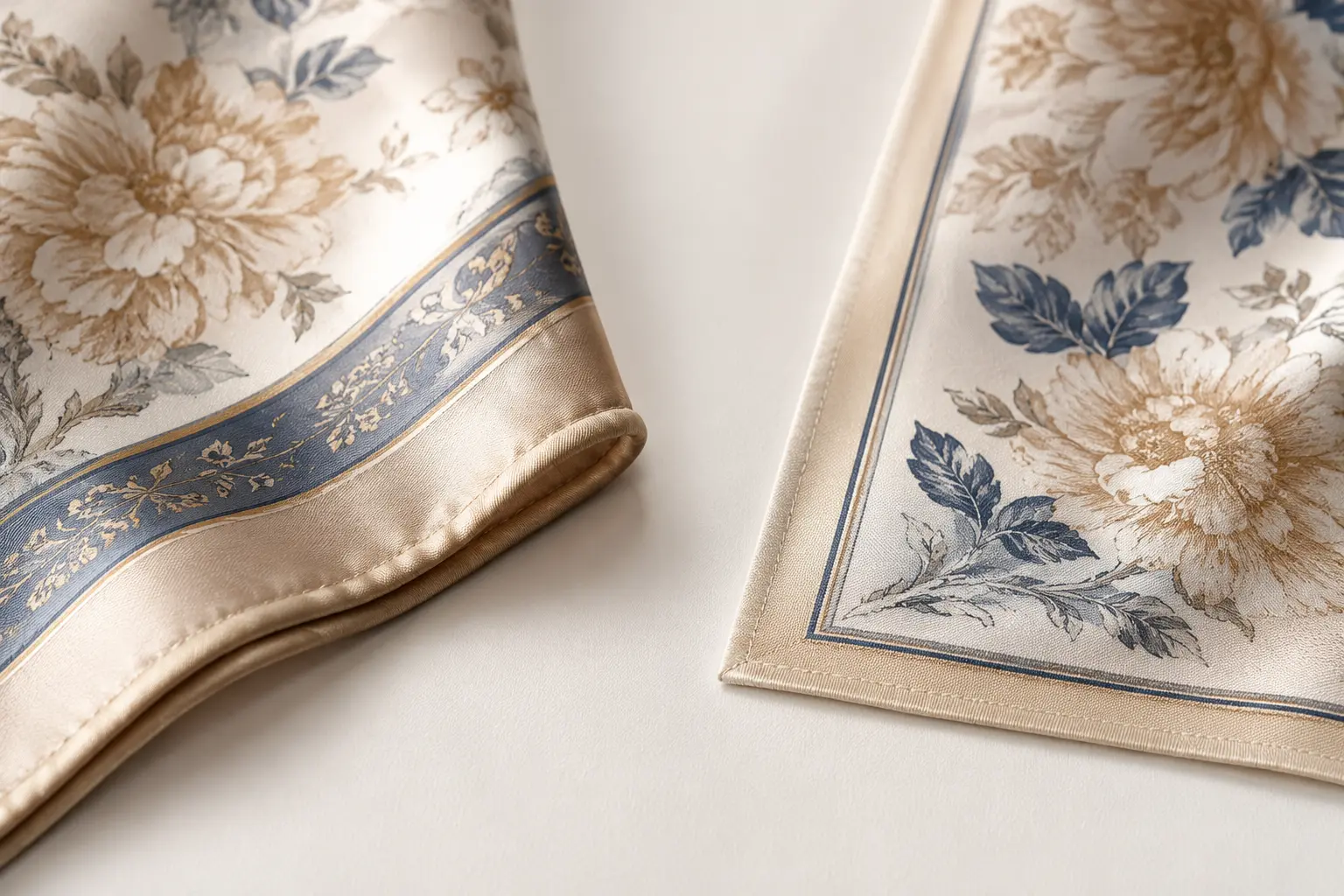
Hand-Rolled vs Machine-Stitched Edges
Both finishes can work. Choose by scarf use, edge detail, schedule, and budget.
| Decision Point | Hand-Rolled | Machine-Stitched |
|---|---|---|
| Look | Raised, rounded, and handmade. | Flat, clean, and uniform. |
| Production | More handwork, time, cost, and corner inspection. | Faster for larger orders and tighter budgets. |
| Use Case | Fashion scarves, museum gifts, executive gifts, and limited editions. | Promotional scarves, uniforms, and high-volume gift programs. |
Quality Points We Check
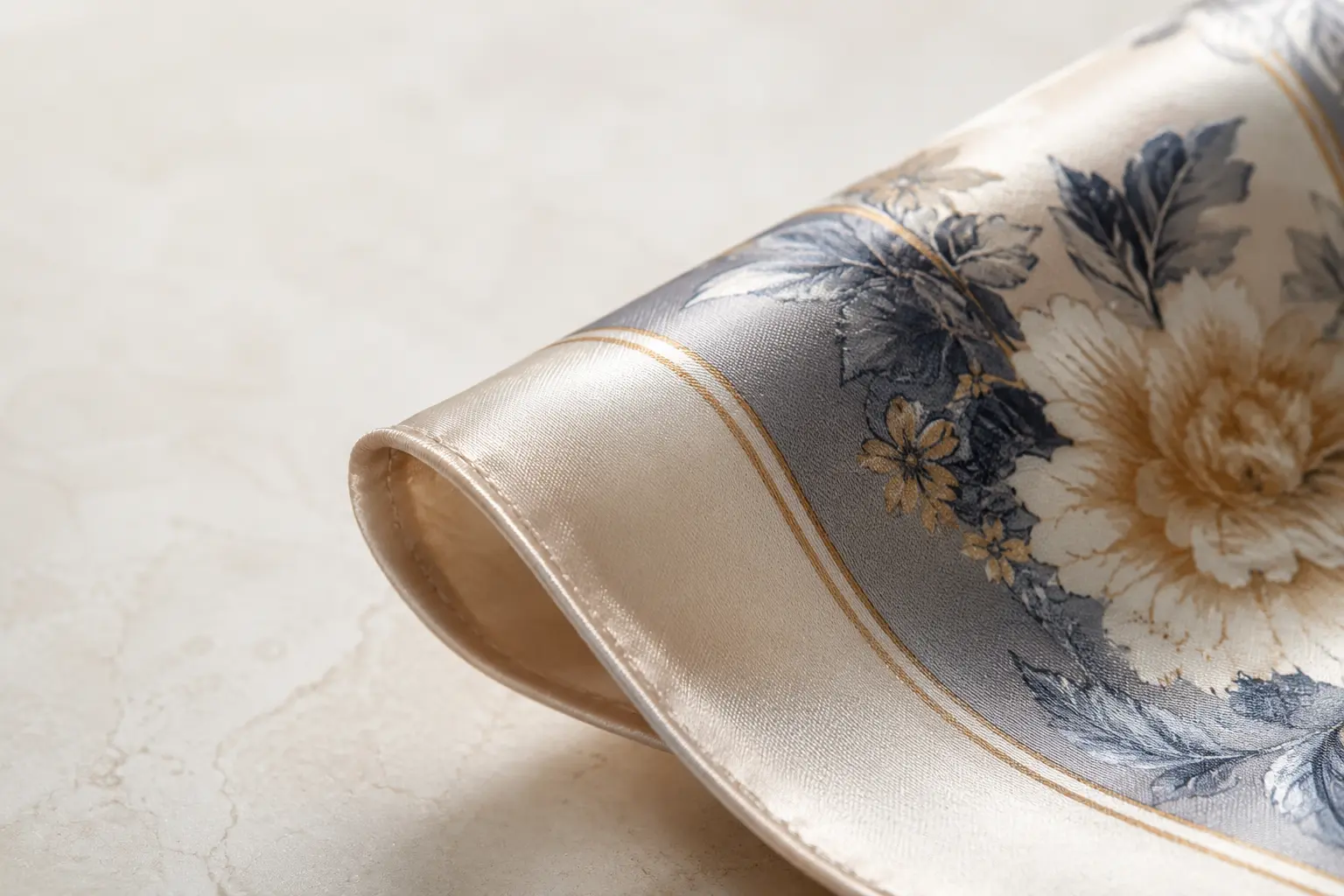
Hand-rolled edges need close checking. Corners, thread, rolling, and pressing should be reviewed on the sample.
- Even edge width, smooth rolling, and clean corners.
- No loose threads, puckering, or border distortion.
- Correct size, pressing, folding, labels, and packaging.
When Hand-Rolled Edges Make Sense
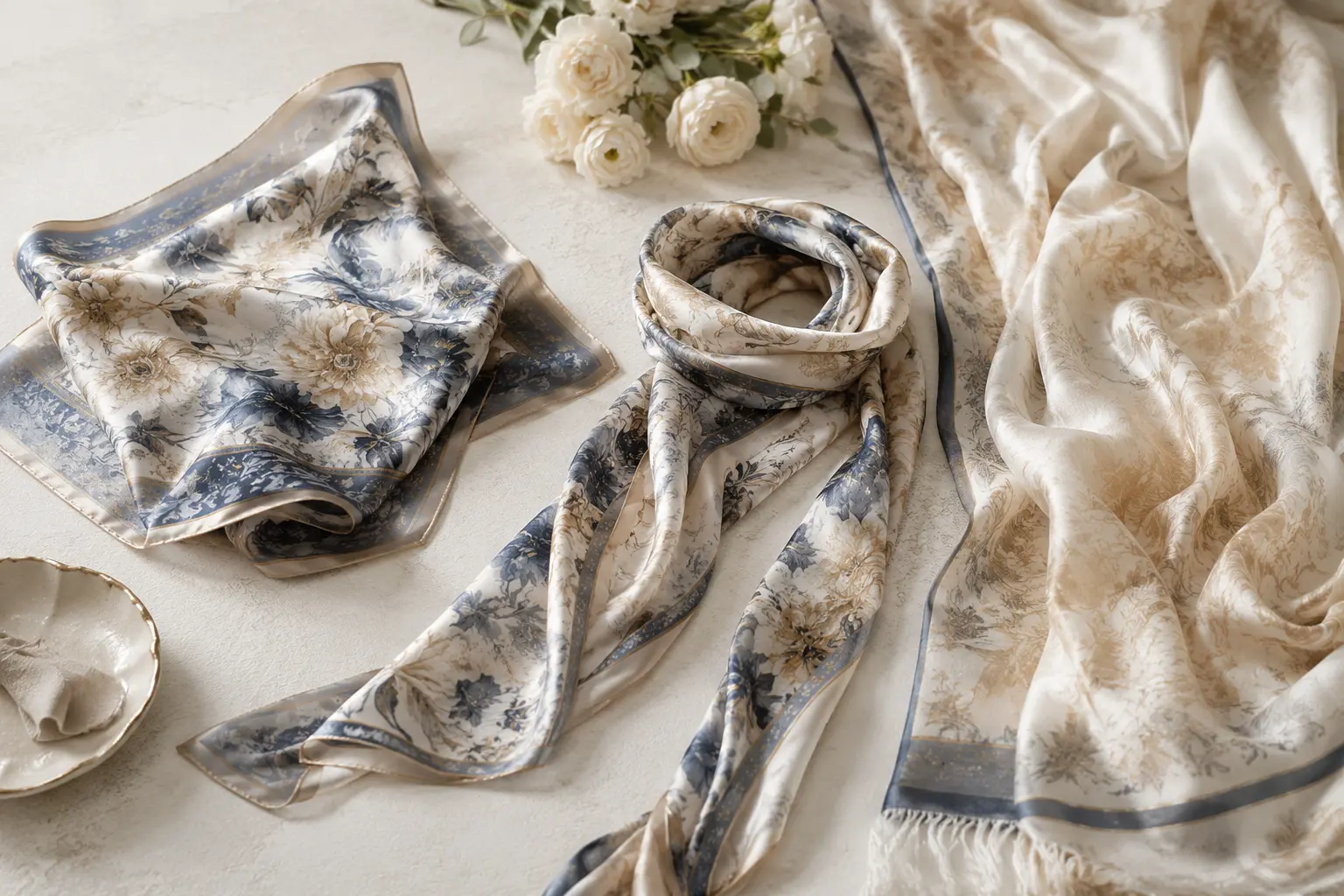
Hand-rolled edges suit fashion, gift, and retail scarves. They may be unnecessary when speed and unit cost matter more.
Edge Finishing Workflow
A sample-first workflow catches border issues before bulk production.
Confirm Scarf
Confirm size, fabric, artwork, use, quantity, and date.
Review Border
Check safe margins, border design, logo, and color references.
Make Sample
Finish a sample edge for buyer review.
Inspect Edge
Check width, rolling, stitches, corners, pressing, and folding.
Approve Bulk
Confirm labels and packaging before bulk finishing.
How to Judge Edge Quality
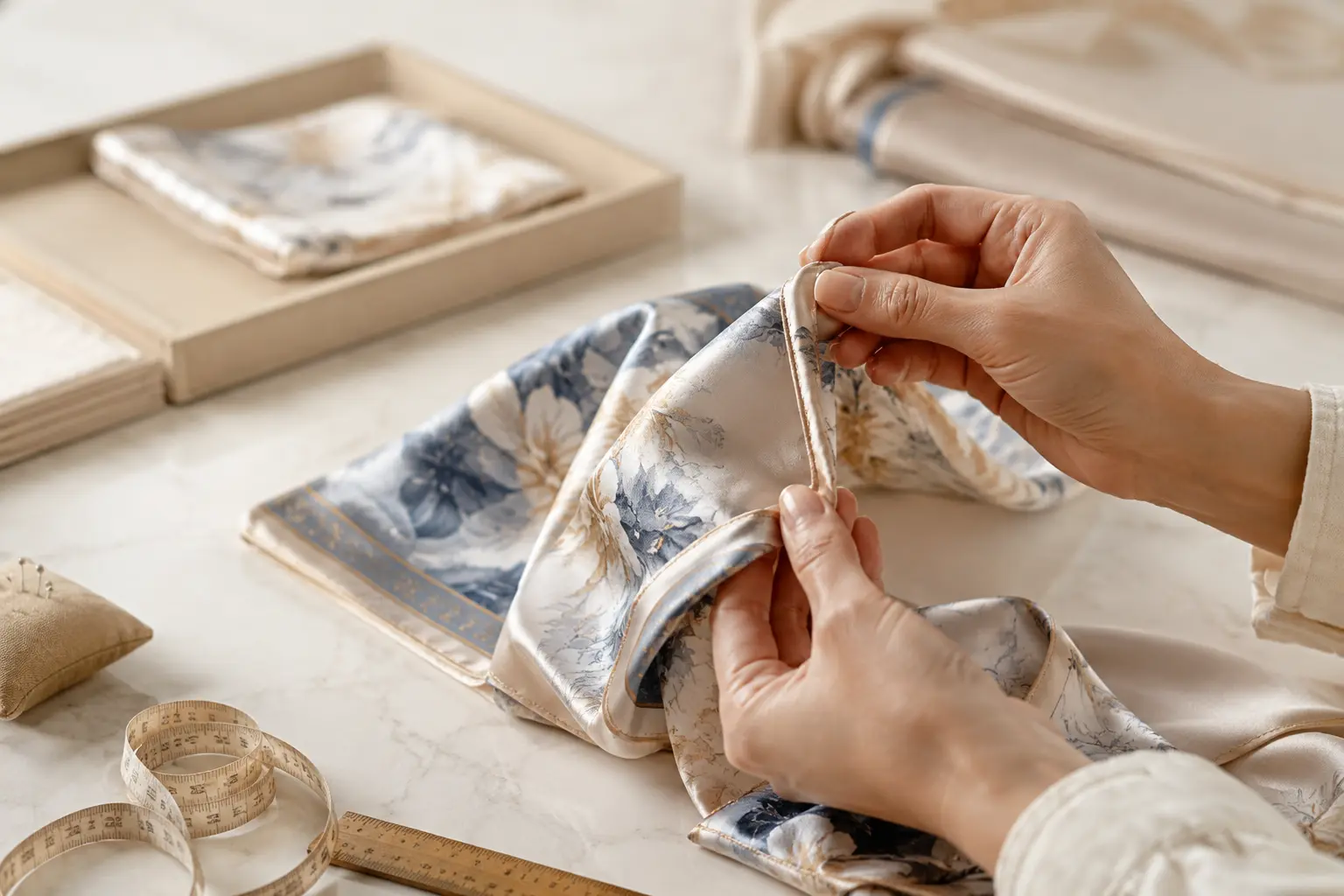
Corners show quality quickly. Keep the approved sample as the reference for edge width, stitch spacing, corner shape, pressing, and packaging.
- Check all four corners.
- Make sure the border does not cover key artwork.
- Confirm lead time before production planning.
Request Hand-Rolled Edge Advice
Send scarf size, silk fabric, artwork, border design, quantity, and target date. We can review the practical edge finish.
Hand-Rolled Silk Edge FAQ
Practical answers about hand-rolled edges, machine-stitched edges, timing, fabric suitability, and artwork margins.