The silk cocoon is the natural starting point of all genuine silk. Its structure, cleanliness, and fiber length directly influence the quality, strength, and appearance of finished silk fabric.
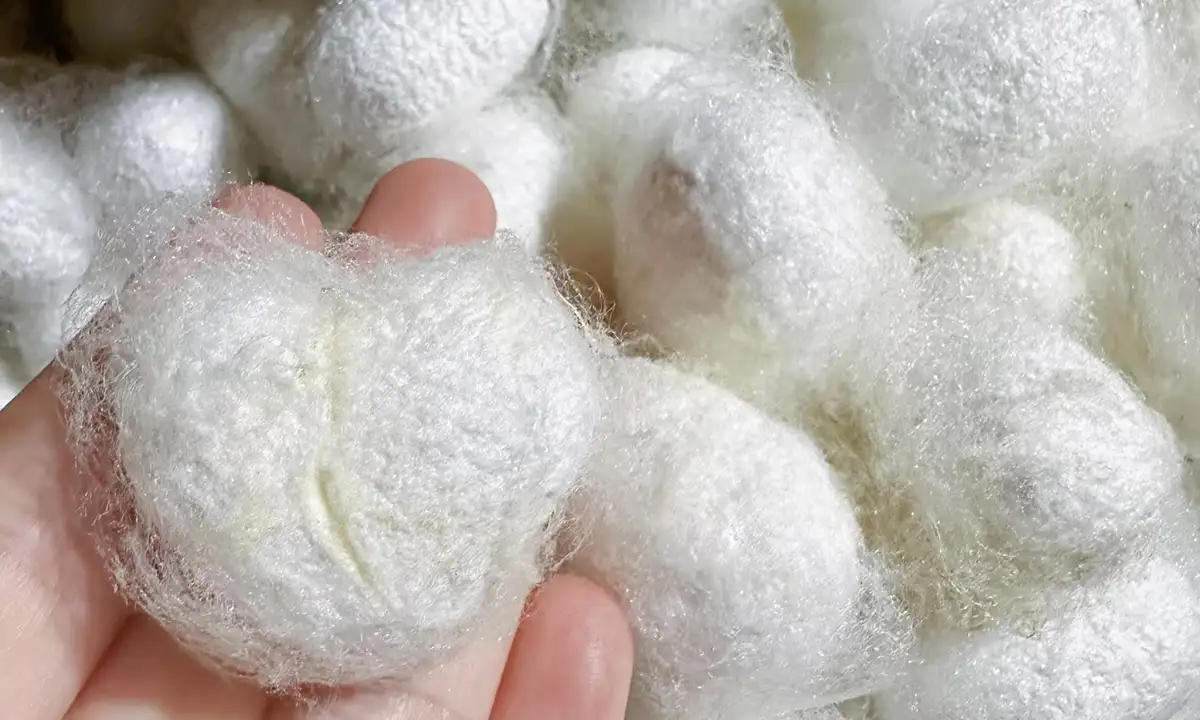
A silk cocoon is formed when a silkworm spins a continuous filament around itself before transforming into a moth. This filament becomes the raw material for silk yarn.
A single cocoon can contain one continuous silk filament measuring several hundred meters in length, making silk one of the strongest natural fibers by weight.
Silk filament is composed mainly of natural proteins, giving silk its smooth surface, soft hand-feel, and excellent dye absorption.
Not all silk cocoons produce the same results. Quality assessment begins before any spinning or weaving takes place.
Longer continuous filaments result in smoother, stronger silk yarn with fewer joins.
Evenly shaped cocoons allow more stable reeling and consistent yarn quality.
Clean cocoons reduce impurities, improving yarn strength and appearance.
The transformation from cocoon to finished silk involves multiple controlled steps that preserve fiber integrity.
Silk filaments are carefully unwound from cocoons.
Filaments are twisted into silk yarn of controlled thickness.
Yarn is woven into silk fabric with defined structure.
Finishing enhances softness, luster, and performance.
Most premium silk fabrics are made from cocoons produced by mulberry-fed silkworms.
Mulberry silk cocoons provide longer, cleaner filaments, supporting higher-grade silk yarns and more refined fabric results. This is why mulberry silk is widely recognized as the industry standard for premium silk products.
Quality silk begins with quality cocoons. Share your product goals, and we’ll guide you through material selection from cocoon to finished silk fabric.
Contact Our Team