
You can start a custom silk scarf project with a reference photo, a sketch, or an idea. Tell us how you plan to use it, roughly how many you need, and when and where the scarves should arrive. If you have not chosen the fabric or finish, we can discuss the options with you.
Here is what to send for a first quote, and what to confirm before sampling.
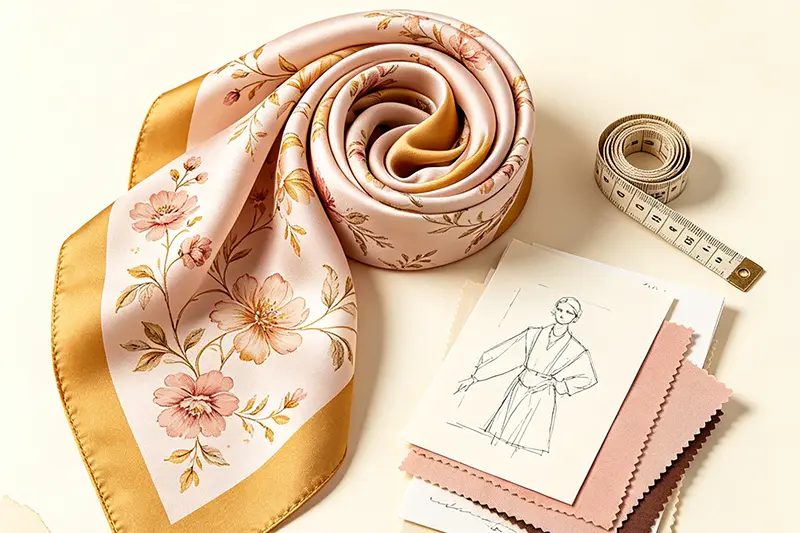
What to send with your first inquiry
- A reference image or design, plus the intended use.
- An approximate scarf size and quantity for each design.
- Your preferred fabric and packaging, if you have chosen them.
- The delivery destination and the date you need the scarves in hand.
If a detail is undecided, write “please advise.” That tells us where you need a recommendation.
A first quote or a sample: what needs to be ready?
An early estimate can be based on proposed specifications. If those specifications change, the price and timing may change too. Before making a sample, confirm exactly what that sample is meant to show.
| Detail | For an initial quote | Before making the sample |
|---|---|---|
| Size | Shape and approximate dimensions. | Finished dimensions and agreed measurement tolerance. |
| Fabric | A fabric choice or a description of the feel you want. | Selected weave and momme for the printed or sewn sample. |
| Artwork | A sketch, reference image or existing design. | Approved layout, print size, border, logo position and color references. |
| Finishing | A hem preference or a request to compare options. | Hem and label details for a finished scarf sample. |
| Packaging | Simple protection, retail packaging or a gift presentation. | Box, folding and artwork details before a packaging or complete set sample. |
| Order plan | Quantity by design, destination and required arrival date. | What will be sampled, who will review it and the next approval step. |
1. Choose the size and shape
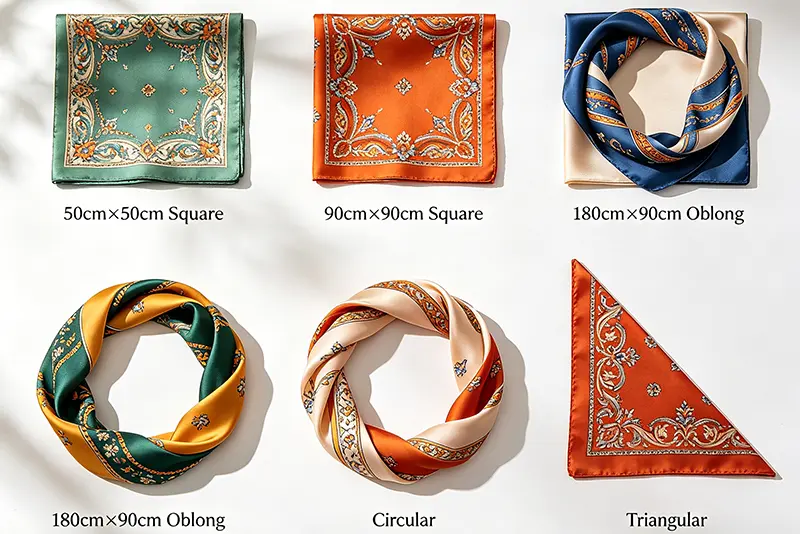
A neck scarf, a bag accessory and a shoulder wrap need different proportions. Start with the intended use, then choose between a square scarf, a long scarf, a twilly or a shawl.
For a square scarf, 50 × 50 cm, 70 × 70 cm and 90 × 90 cm are useful sizes to compare. Fold a piece of fabric to the proposed size and try the intended knot or styling. A design that looks good laid flat may hide its main motif when tied.
State the units and make clear that you mean the finished size after hemming. We can then confirm the cutting and edge allowances. Avoid building the final border artwork around an assumed allowance before the hem method is agreed.
2. Choose a fabric, or describe the feel you want
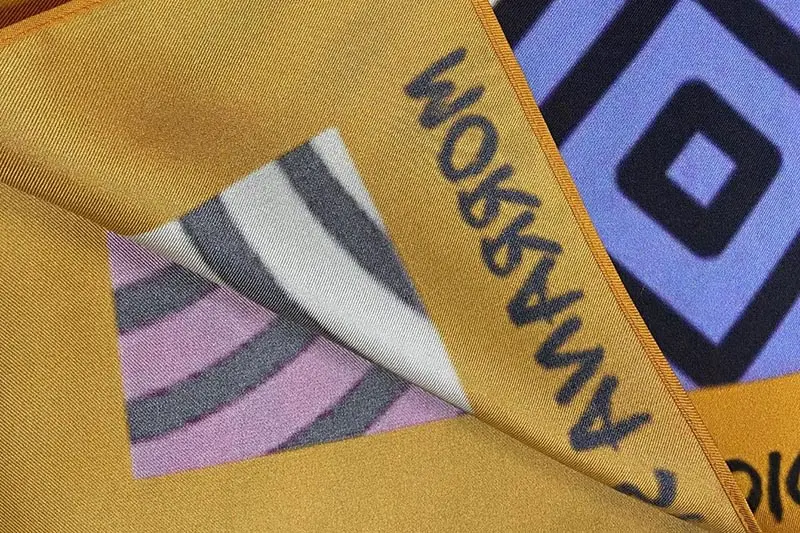
“Soft with a glossy surface” or “a little more body for a structured drape” is a useful starting point. If you have a scarf with the feel you want, use it as a reference and explain which qualities matter.
Weave and weight are separate choices. Twill has a visible diagonal texture; satin has a smoother, glossy face. Momme describes the fabric's weight, not its weave. Our square scarf range commonly uses 14–16 momme, which is a starting point for comparing swatches rather than a rule for every scarf.
If you are unsure, review a silk fabric swatch book before ordering a printed sample. Our guide to momme in silk fabric explains the weight options in more detail.
3. Prepare artwork and color references
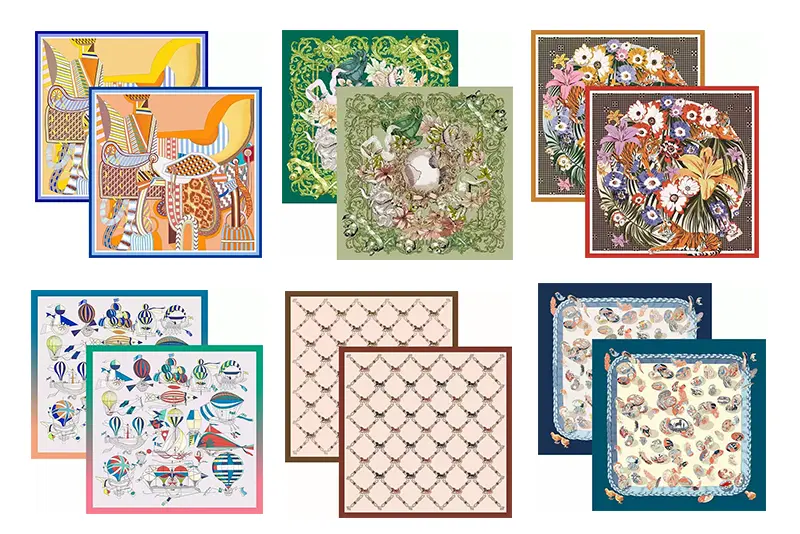
A reference image can explain your idea. For printing, we need to review the actual design file at the intended scarf size. Send the original file you have, rather than only a screenshot, and identify the latest version.
- Layout: show the whole scarf, including the border, corners and logo position. Say whether the artwork is a single composition across the scarf or a repeating pattern.
- Detail: flag small lettering, fine lines and anything close to the hem. These deserve a check at the actual print size.
- Color: include Pantone references or a physical color reference when a particular shade matters. Tell us which colors are critical.
- Reverse side: explain how you expect the back to look, especially if both sides will be visible when worn.
If your design centers on a company logo, see our custom silk scarves with logo for layout, label and packaging options to include in your brief.
Ask us to confirm the file format, resolution at print size and edge allowance before preparing the production file. These requirements depend on the design and printing method. A sharp preview on a small screen does not show how a file will print across a full scarf.
Silk's weave and sheen affect how colors appear, so use the physical sample for final color approval. You can review our silk printing guidelines if your designer needs more context; you do not have to choose the printing method before sending an inquiry.
4. Confirm the hem and labels
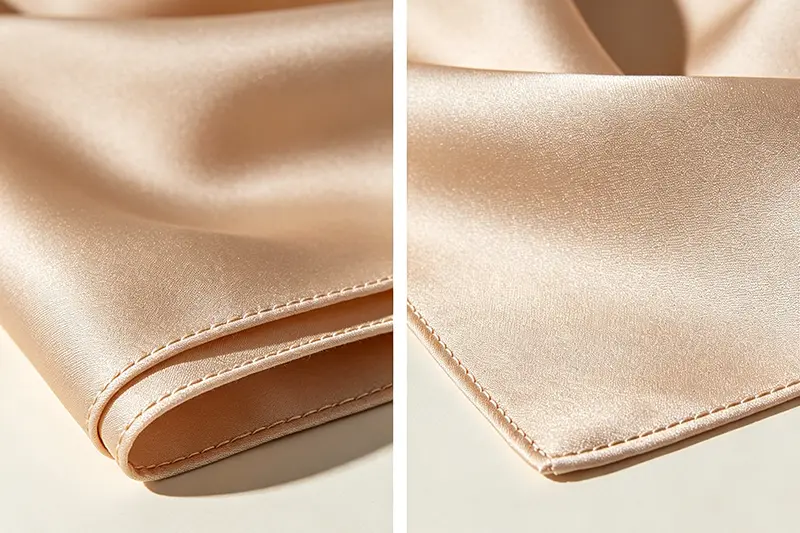
Ask to compare hand-rolled and machine-finished edges if you have not chosen a finish. If you have an edge finish you like, send a close-up. We can then discuss the hem method, thread color and roll direction.
The hem and printed border should be reviewed together. A narrow line or logo placed too close to the edge may disappear into the roll. For labels, mark the preferred corner or edge and confirm the label size and artwork before the finished scarf sample is sewn.
5. Plan the packaging
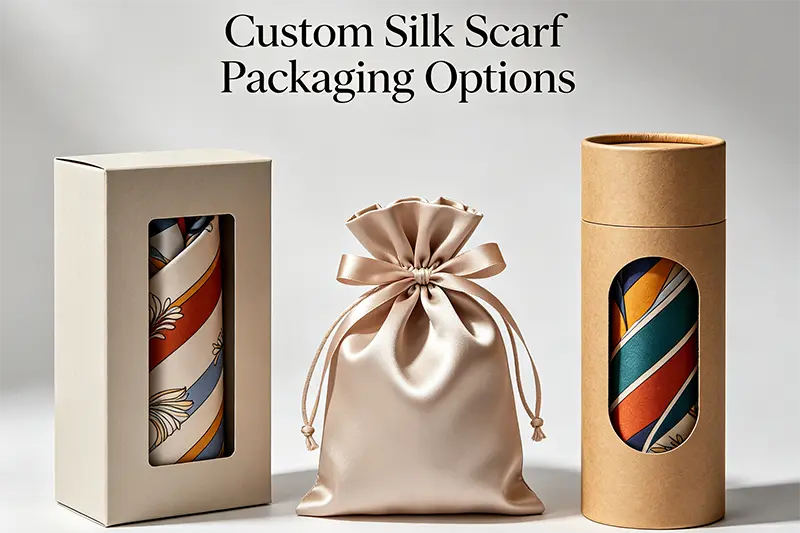
A scarf going to a retail shelf may need a sleeve, barcode and care card. A corporate gift may need a box and an insert. Tell us the intended presentation early, even if the packaging artwork is still being designed.
For a first quote, the packaging type and approximate quantity are enough to start the discussion. Before making a packaging sample, confirm the folded scarf size, box or sleeve dimensions, logo, inserts and whether each scarf will be packed individually. Packaging does not have to be finalized before a fabric swatch can be reviewed.
See our silk packaging guide for examples of the different formats.
6. List quantities and your delivery date
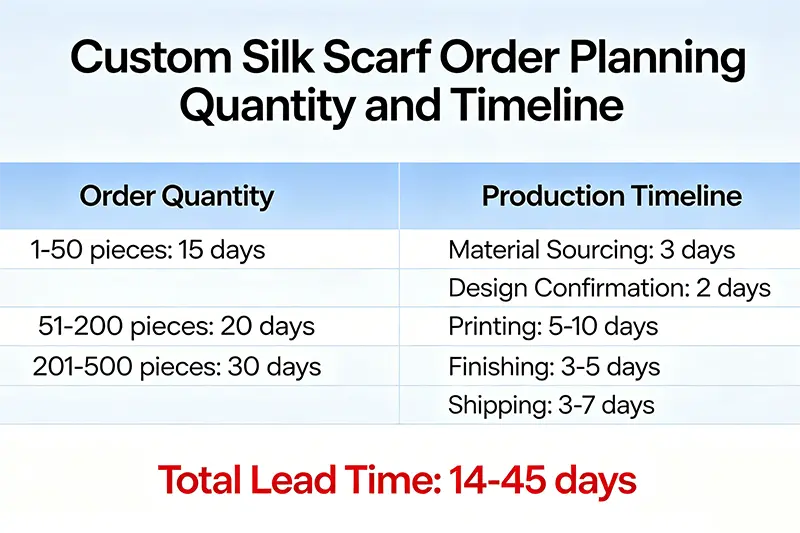
“200 scarves” leaves an important question open: is that one design or several? “Two designs, 100 of each” gives us a clearer basis for reviewing the order. List quantities by design, colorway and size, and say whether you want samples first or a bulk quotation.
A sample quantity and a production minimum are different things. Confirm the applicable MOQ for your chosen fabric, print and packaging; do not assume that the ability to make one sample means the same terms apply to a bulk order.
Give the destination city and country, plus the date the scarves need to arrive. A launch date is not a shipping date. The schedule also needs time for artwork review, sampling, your feedback, possible revisions, production and transport.
7. Share your priorities
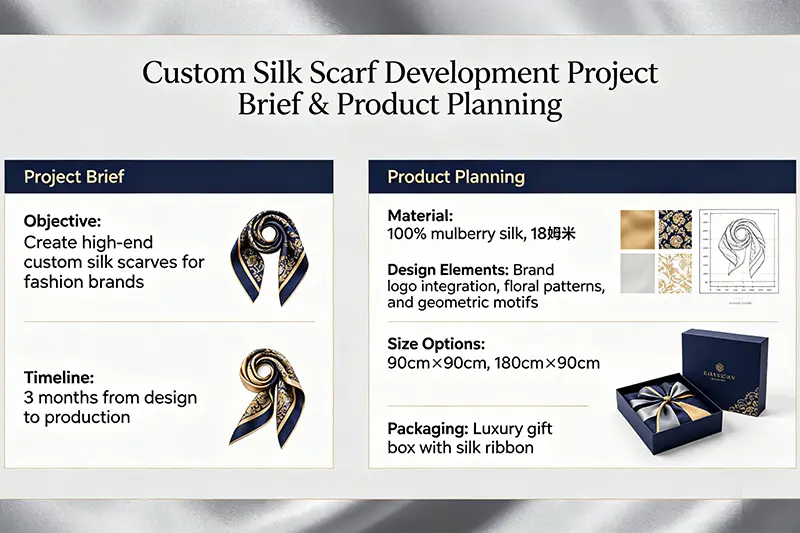
A museum shop, a fashion collection and an event gift may need the same scarf size but different finishes and packaging. Explain where the scarf will be sold or used, and share a target budget if you have one. Say whether that budget includes packaging and shipping.
Separate the fixed requirements from the flexible ones. For example, the brand color and arrival date might be fixed, while the fabric weight or gift box can be compared. This makes it easier to suggest useful options.
An inquiry example you can use
Your first message can be this simple. Replace the example details with your own:
Subject: Custom silk scarf inquiry — 70 × 70 cm, two designs
Hello WiseSilk,
We are planning printed silk scarves for a museum shop and would like a quote and advice on sampling.
- Size: approximately 70 × 70 cm, finished.
- Quantity: 200 scarves in total; two designs, 100 of each.
- Fabric: undecided. Please suggest options with a soft feel and enough body to show the artwork.
- Artwork: illustrations are available; the border and logo position still need review.
- Finish: please compare hand-rolled and machine-finished edges.
- Packaging: a paper sleeve and care card. We would also like to compare gift-box pricing.
- Delivery: Paris, France, by [required arrival date].
Which fabric would you suggest, and what else do you need to quote and make a sample?
Ready to discuss your scarf?
Email us your reference images and the details you have so far. Let us know which choices you would like help with.
Email your scarf briefinfo@wisesilk.com · Other ways to contact us
Once a sample is ready, use our sample approval checklist to record what is approved and what needs changing before bulk production.